Piston or Peristaltic Filling: Which System Suits My Product?
Compare piston, peristaltic and hybrid filling through product compatibility, changeovers, cleaning and sample testing rather than viscosity alone.

Choosing piston or peristaltic filling requires more than deciding whether a liquid is thin or thick. Target volume, contact materials, particles, temperature, cleaning and changeover frequency all affect the choice. Neither method is automatically faster or more accurate for every product.
Filling oil and shampoo on one line is a different requirement from filling one product all day. Define the product list, packaging and output before choosing the pump.
When should piston filling be considered?
A piston system transfers product through a volumetric dosing movement. Piston range, product supply, valves and nozzle design affect its performance. Suitable configurations can handle free-flowing or viscous products, while particles require a separate review of passage sizes and product handling.
For widely different fill volumes, do not assume one piston is suitable throughout. A change of dosing components or filling unit may be needed alongside settings.
What matters in peristaltic filling?
The pump compresses a flexible tube to move product. Tube material and size must suit the product and operating conditions. Connections and the filling nozzle are also part of the fluid path. Replacing tubing does not clean every other contact component.
A tube-based system is not automatically compatible with every chemical, nor does it remove all cleaning requirements. Product information and material compatibility must be checked.
Send your product, container and required volume. We can assess piston, peristaltic and hybrid options for your application.
Let’s talk about your machine
If you’d like to talk, leave your name and phone number and we’ll give you a call.
Thank you. We’ll be in touch.
Questions for a useful comparison
QuestionWhat to verifyWhich volumes?Operating range and calibration at each required doseFoaming or dripping?Nozzle, flow and end-of-fill behaviourFrequent product changes?Emptying, cleaning and setup timeParticles present?Flow passages and product handlingRequired hourly output?The full cycle with the actual product and containerIs a hybrid machine necessary?
No. Combining piston and peristaltic filling may help with different product families, but it also adds equipment, cleaning and maintenance. If a single method covers the work, a simpler configuration can be more appropriate.
What should a sample test establish?
Observe repeated fills, quantity, dripping, foam and product supply rather than one successful bottle. Consider changes in supply level or temperature. Agree the measurement method and acceptable tolerance before comparing results.
Ask whether an output figure includes changeovers and cleaning. A nominal filling rate is not necessarily the daily finished output of your business.
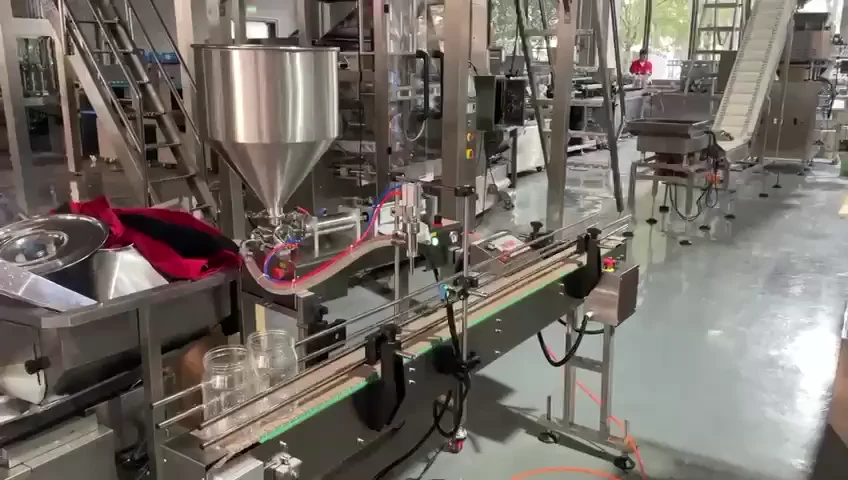
Available configurations
We can prepare piston, peristaltic or hybrid systems with suitable equipment for 5 ml–5 litre requirements and adjustable container handling up to 17 cm diameter. This does not mean every product uses identical hardware or settings. A jacketed heated mixing tank can be considered where needed.
Reference and related guide
Watson-Marlow product and tubing support illustrates the need to check product-specific tubing and pump suitability; it is not a statement about our installed pump brand. See also choosing a liquid filling machine.
Discuss your product or machine with us
Başakşehir Makine is based at İkitelli OSB, Atatürk Blv. Beyaz Tower, Floor 6, No. 90, Başakşehir, Istanbul, Turkey. We agree the scope of on-site work in Istanbul and, for suitable PLC projects across Turkey, remote support or shipment of the controller. For machinery enquiries, samples, delivery and commissioning are agreed in the quotation.
Filling machine options and actual videos · PLC and HMI programming services · Contact us
The cover is an AI-generated editorial illustration, not a photograph of a delivered customer project or a wiring diagram.